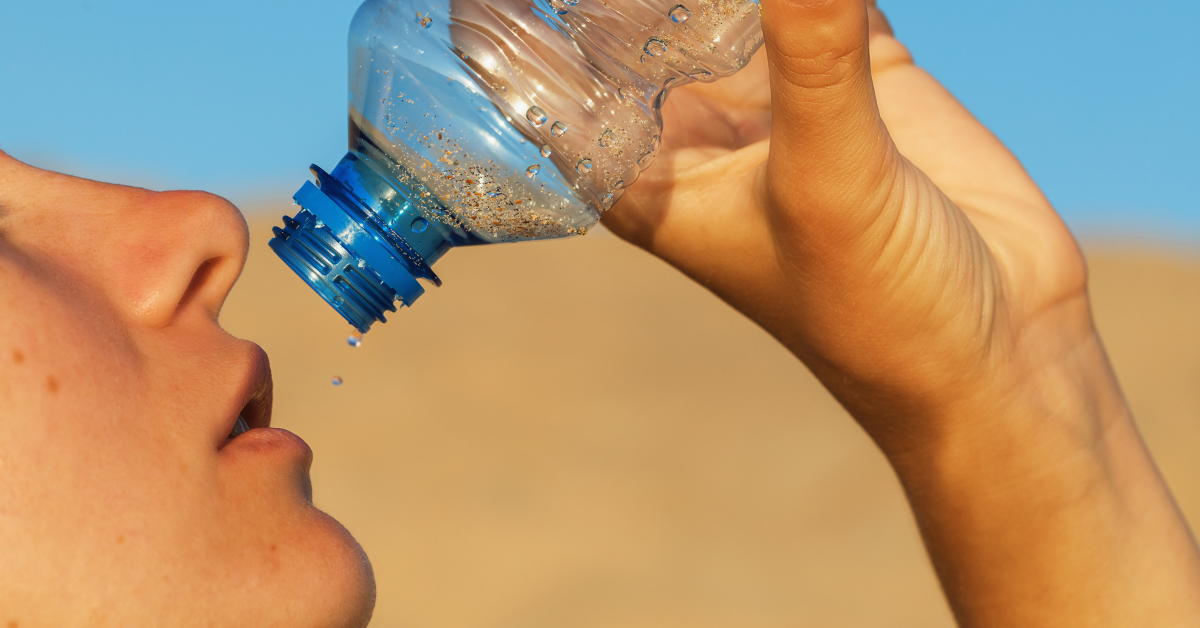
Dehydration is when your body doesn’t have as much water and fluids as it should.
It can be caused by losing too much fluid, not drinking enough fluids, or both. It can be mild, moderate, or severe based on how much of the body’s fluid is lost or not replenished.
When severe, dehydration is a life-threatening emergency.
Symptoms include:
- Dry or sticky mouth
- Lethargy (or coma with severe dehydration)
- Low or no urine output; urine looks dark yellow
- No tears
- Sore throat or mouth sores
- Sunken eyes
How to Prevent Dehydration
The foremost treatment for dehydration is prevention. Anticipate the need for increased fluid intake.
- Plan ahead and take extra water to all outdoor events and work where increased sweating, activity, and heat stress will increase fluid losses.
- Encourage athletes and outdoor workers to replace fluids at a rate that equals the loss.
- Avoid exercise and exposure during high heat index days.
- Listen to weather forecasts for high heat stress days, and plan outdoor events during cooler temperatures.
- Ensure that older people, infants, and children have adequate drinking water or fluids available and assist them as necessary.
- Avoid alcohol consumption, especially when it is very warm. Alcohol increases water loss and impairs your ability to sense early signs of dehydration.
- Wear light-colored and loose-fitting clothing and break up exposure to heat.
- Find air-conditioned or shady areas and let yourself cool between exposures.